
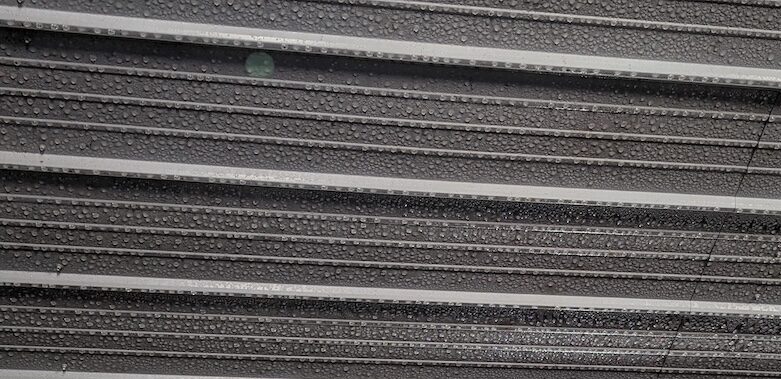
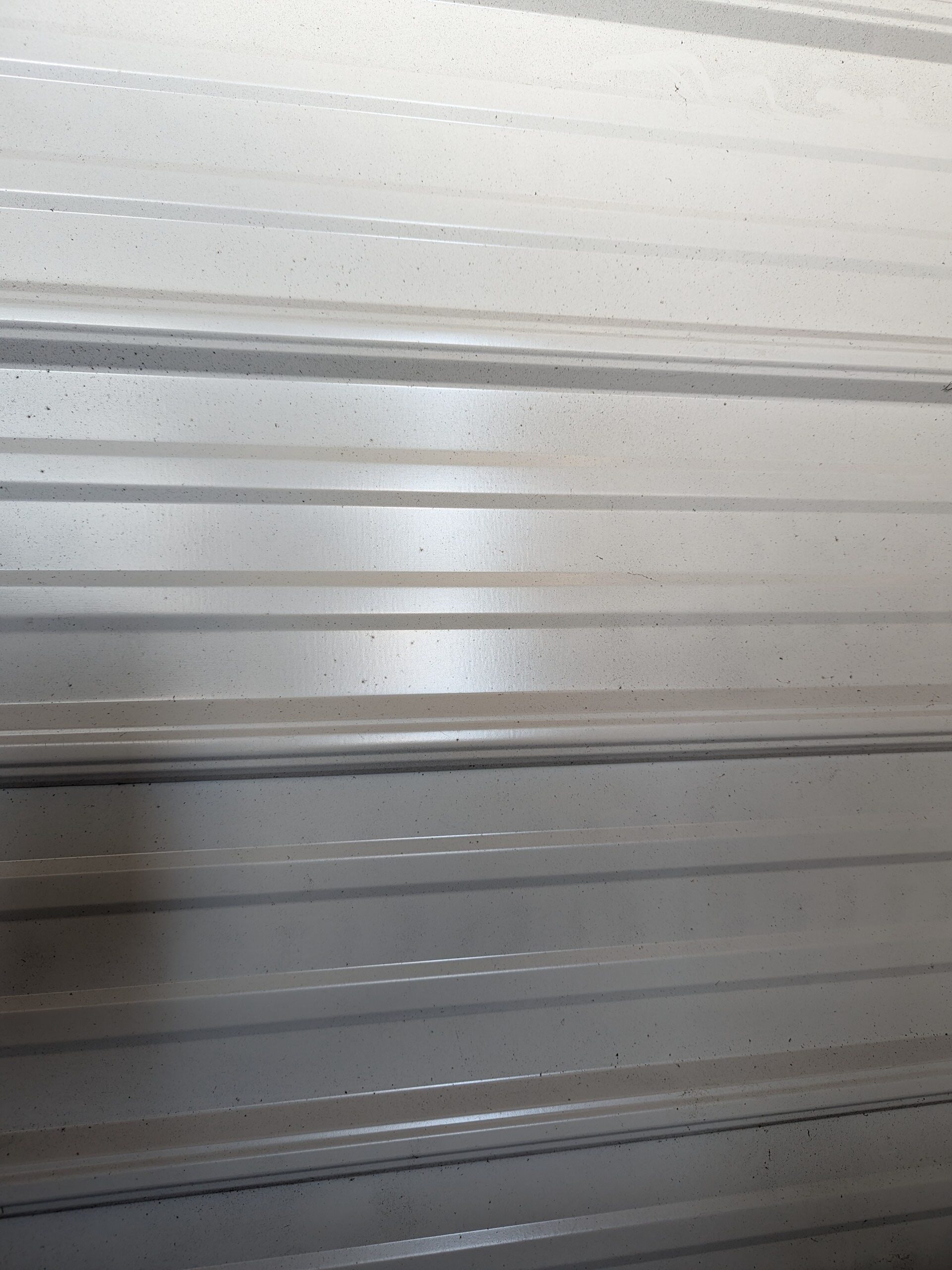
It can look like this!
Two Ways to Keep a Wash Bay Dry
Practical, tested strategies for removing moisture and preventing corrosion, slips, and humidity problems in wash bays. Compare a traditional intake + exhaust approach with Keep The Heat® air exchangers so you can pick the right solution for your facility.
Problem Overview
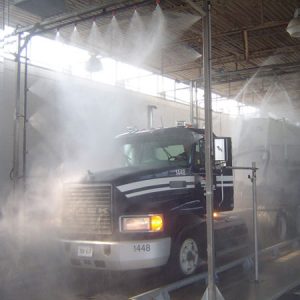
Wash bays create a lot of water vapor and airborne droplets. If that moisture isn’t removed and replaced with drier air, it causes prolonged surface wetness, condensation on equipment, higher humidity, corrosion and unsafe floors. The right approach balances exhaust (remove wet air) with controlled intake (bring fresh air) while minimizing energy loss.
Design goals
- Rapid removal of humid air at the source
- Makeup air that doesn’t reintroduce contaminants
- Reduce condensation on walls/fixtures
- Energy efficiency and simplicity
Quick Comparison
| Feature | Intake Louver + Exhaust Fan | Keep The Heat® Air Exchanger |
|---|---|---|
| How it works | Exhaust removes wet air; louvers/intake bring makeup outside air. | Exchanges heat between incoming and outgoing air so fresh air is conditioned without mixing streams. |
| Energy use | Simple but can be high in winter/summer when outside air must be heated/cooled. | Significantly lower heating/cooling load due to heat recovery. |
| Cost | Lower upfront; moderate operating cost. | Higher upfront; lower operating cost over time. |
| Maintenance | Fans, louvers, filters—straightforward. | No filters, no maintenance |
| Ideal when | Budget-constrained, mild climate, or simple installations. | High humidity control, energy-sensitive sites, extreme climates. |
Solution A — Intake Louver + Exhaust Fan
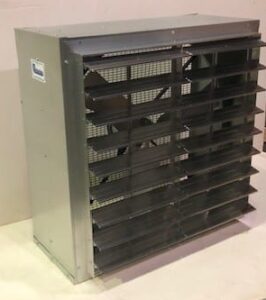
Exhaust Fan with Shutter
Simple and effective: an exhaust fan pulls the wet, humid air out of the wash bay while an intake louver (or dedicated makeup unit) brings in outside air to replace it. Proper placement and balancing are critical so you don’t create dead zones or draw contaminated air from adjacent spaces.
Key components
- Exhaust fan sized for the bay’s cubic footage and turnover requirements (CFM)
- Intake louver with damper or motorized makeup air to control volume
- Simple filters and insect screens
- Dampers and controls for automated operation
Benefits
- Lower capital cost and fast installation
- Simple to operate and maintain
- Effective at removing source moisture when properly balanced
Considerations & tips
- Cold climates: unconditioned makeup air will increase heating load and can cool surfaces, causing condensation. Consider pre-heating or intermittent operation.
- Use adjustable dampers and variable-speed fans for better control and energy savings.
- Place intake away from contamination sources (vehicle exhaust, overhead doors).
Solution B — Keep The Heat® Air Exchanger
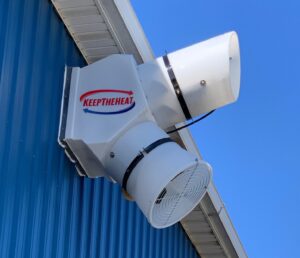
Keep The Heat Air Exchanger
Keep The Heat® style air exchangers (heat recovery ventilators / energy recovery ventilators) transfer heat between the outgoing wet air and incoming fresh air without mixing the two streams. This keeps the incoming air closer to building temperature and reduces energy lost to ventilation.
Key components
- Heat-exchange core that transfers energy between exhaust and intake
- Fans for supply and exhaust
- Made from rust resistant plastics, galvanized, and stainless steel
- Speen controllable motors available for use with Variable Frequency Drives
Benefits
- Major energy savings — incoming air is pre-warmed or pre-cooled using outgoing air
- Better humidity control and reduced condensation risk
- Improved occupant comfort and faster drying times
Considerations & tips
- Higher initial investment but strong payback in cold/hot climates or high-use wash bays.
- Inspect the core for blocking from oil/mist.
- Ensure the unit has an anti-icing strategy if used in freezing conditions (preheat, bypass, or defrost cycle).
How to choose between them
- Start with climate: in mild climates a simple intake + exhaust often works fine; in extreme climates a heat exchanger saves energy.
- Estimate run-hours and energy costs: the more hours per year the system runs, the quicker the payback on an exchanger.
- Consider maintenance capacity: both require minimal upkeep if filters are used
- Think about humidity targets: if you must keep surfaces dry for safety or corrosion reasons, heat recovery helps maintain a drier environment.
About Our Company
About Our Company
We are centrally located in Iowa, serving all of North America. We have a combined 30 years of experience designing, installing and maintaining a wide range of air management systems.
Our Services
Ventilation Pros designs and engineers custom ventilation systems for a variety of environments. Our ventilation technology is used in commercial, industrial, and public buildings and processes.
Our Solutions
We partner with the best manufacturers of air transfer and air modifiers in the industry.
Keep The Heat – Air Exchanger
Direct Exhaust Removal Systems
Ambient Air Filtration Systems – 100% climate efficient
High-Velocity Fans for Summertime Cooling
HVAC Fabric Ducting for better air distribution and solving negative air pressure situations
What We Do
We rely on multiple manufacturers to make sure we have the ideal solution for every client’s unique air management situation. We have extensive experience in the development of ventilation systems specifically for welding fumes, machining mist, plasma smoke, combustion exhaust, assembly clean rooms, carbon dioxide, high humidity applications, among others. We make sure that your manufacturing facilities are safe and contaminant-free with a totally customized solution that is specific to your operations. We work with you to create a healthy and comfortable work environment and optimized performance. Our engineering staff designs professional, customized applications that comply. Our core competencies and disciplines cover the entire life-cycle of your ventilation and building project.
If you operate a commercial, industrial facility or warehouse, extreme weather can be a nightmare. The heating or cooling system is chugging away, your employees are uncomfortable, and your energy bills are through the roof.
At Ventilation Pros we custom design ventilation systems for industrial and commercial buildings. Our ventilation systems reduce the negative pressure and solve indoor air quality problems. Facilities problems associated with welding smoke, oil mist haze, diesel fumes, carbon monoxide, humidity, and negative pressure have all been solved with custom-designed industrial ventilation systems by Ventilation Pros.